OpenRoboTMS: An Open-Source Robotic Platform for Navigated Transcranial Magnetic Stimulation

The University of Manchester Corresponding Author: zhenhong.li@manchester.ac.uk

Abstract

Robot-assisted Transcranial Magnetic Stimulation (Robo-TMS) is an image-guided robotic intervention that enhances the accuracy and reproducibility of conventional manual TMS, a widely used non-invasive brain stimulation technique in clinical treatment and neuroscience research. Despite its clinical promise, the development of Robo-TMS remains challenging due to the multidisciplinary expertise required across medical imaging, computer vision, and robotics. To address this gap, we present OpenRoboTMS, an open-source robotic platform for navigated TMS. OpenRoboTMS provides accessible hardware configurations and integrates advanced robotics with medical imaging through the fully open-source frameworks ROS and 3D Slicer, enabling state-of-the-art developments to be readily incorporated into Robo-TMS workflows. We validate the platform through a series of experiments and provide standardised benchmarks, lowering the barrier to entry and facilitating reproducible, extensible research in Robo-TMS. The codebase is currently being finalised and the accompanying papers are under review; all materials will be publicly released upon acceptance. We envision OpenRoboTMS as a valuable resource for researchers and clinicians, fostering collaboration and accelerating innovation in brain stimulation technologies.

Overview Video

This video provides an overview of the OpenRoboTMS platform, including its background, motivation, and key features for robot-assisted Transcranial Magnetic Stimulation (TMS). It demonstrates how clinicians can perform precise stimulation through an integrated workflow encompassing calibration, MRI-to-phantom registration, target selection, and continuous robotic tracking. Built on 3D Slicer and ROS, the platform delivers an open and extensible framework that unifies accessible hardware, fully open-source software, essential algorithms, and standardised benchmarks for performance evaluation, supporting reproducible research and accelerating innovation in Robo-TMS.

Background and Motivation

Transcranial Magnetic Stimulation (TMS) is a non-invasive neuromodulation technique that modulates brain activity by inducing electric currents through rapidly changing magnetic fields. TMS has demonstrated wide-ranging effectiveness in diagnosing neurological disorders, treating psychiatric conditions, and mapping brain function.
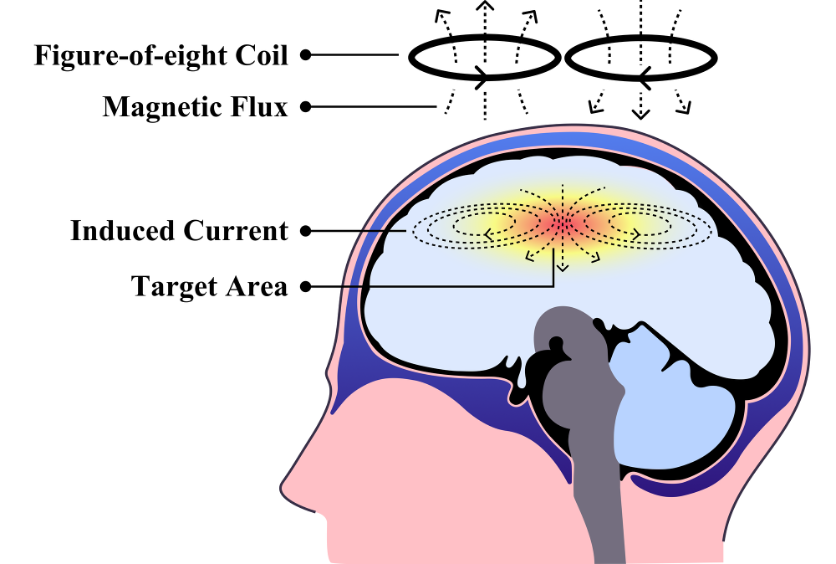
TMS Principle
The principle of TMS

Compared with manual TMS, robot-assisted TMS (Robo-TMS) integrates neuronavigation, a robotic arm, and optical tracking to visualise stimulation targets, maintain precise coil positioning, and compensate for patient head motion in real time. This approach significantly improves targeting accuracy, treatment repeatability, and clinical consistency.
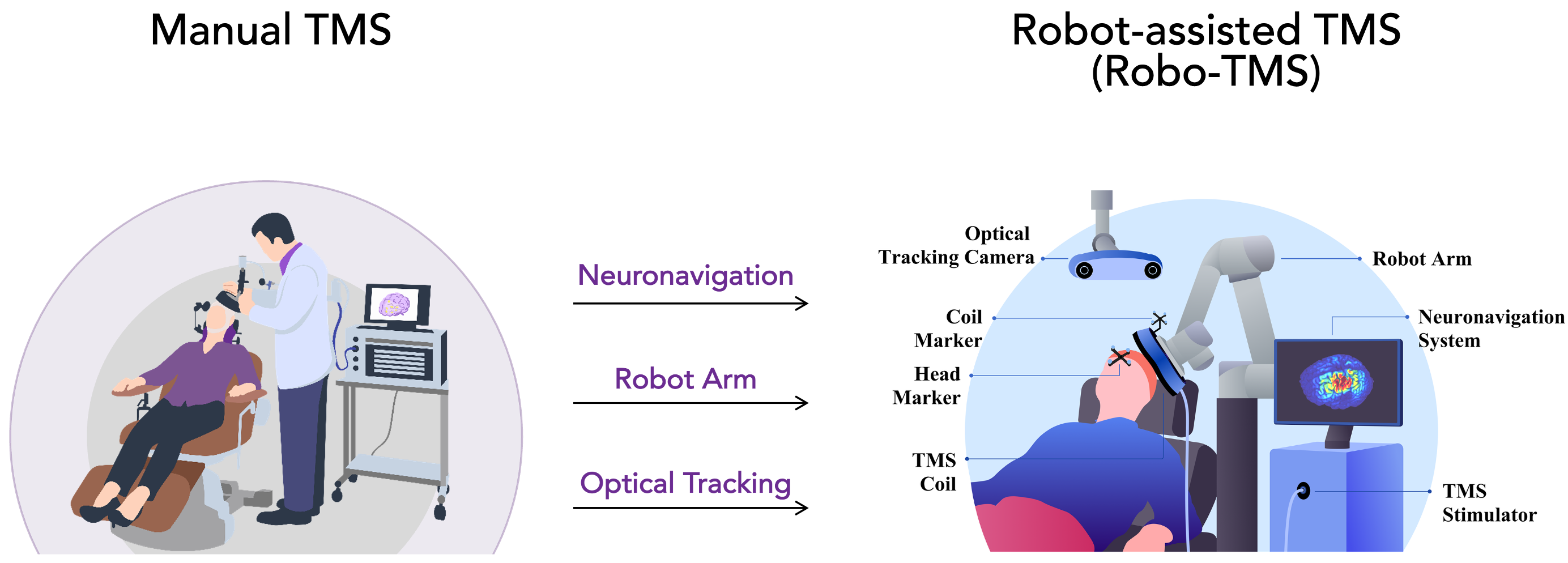
RoboTMS Background
Comparison of manual TMS and RoboTMS

Despite its potential, advancing Robo-TMS technology requires broader research participation, which is currently hindered by the lack of an open platform. OpenRoboTMS addresses this gap by providing accessible hardware configurations, open and extensible software, essential algorithms, and standardised benchmarks—collectively lowering the barrier to entry and accelerating research and innovation.
Hardware Configurations

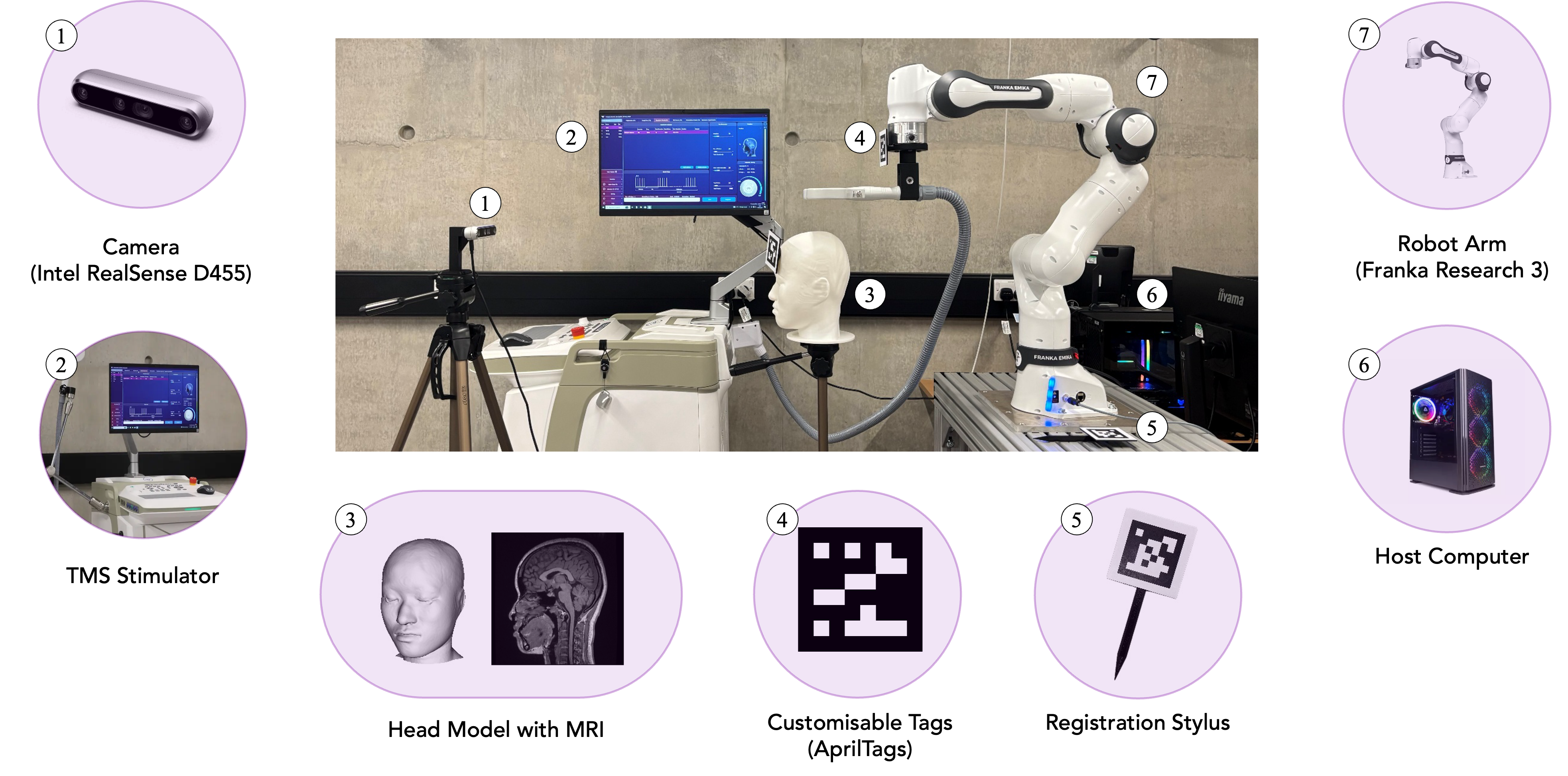
The proposed hardware configuration comprises an optical tracking camera, a TMS stimulator, an MRI-based head model, customisable markers, a registration stylus, a host computer, and a robotic arm. All components are commercially available or easily fabricated, ensuring broad accessibility for research groups.

Hardware Configurations
An overview of the proposed OpenRoboTMS hardware configurations

Software Framework

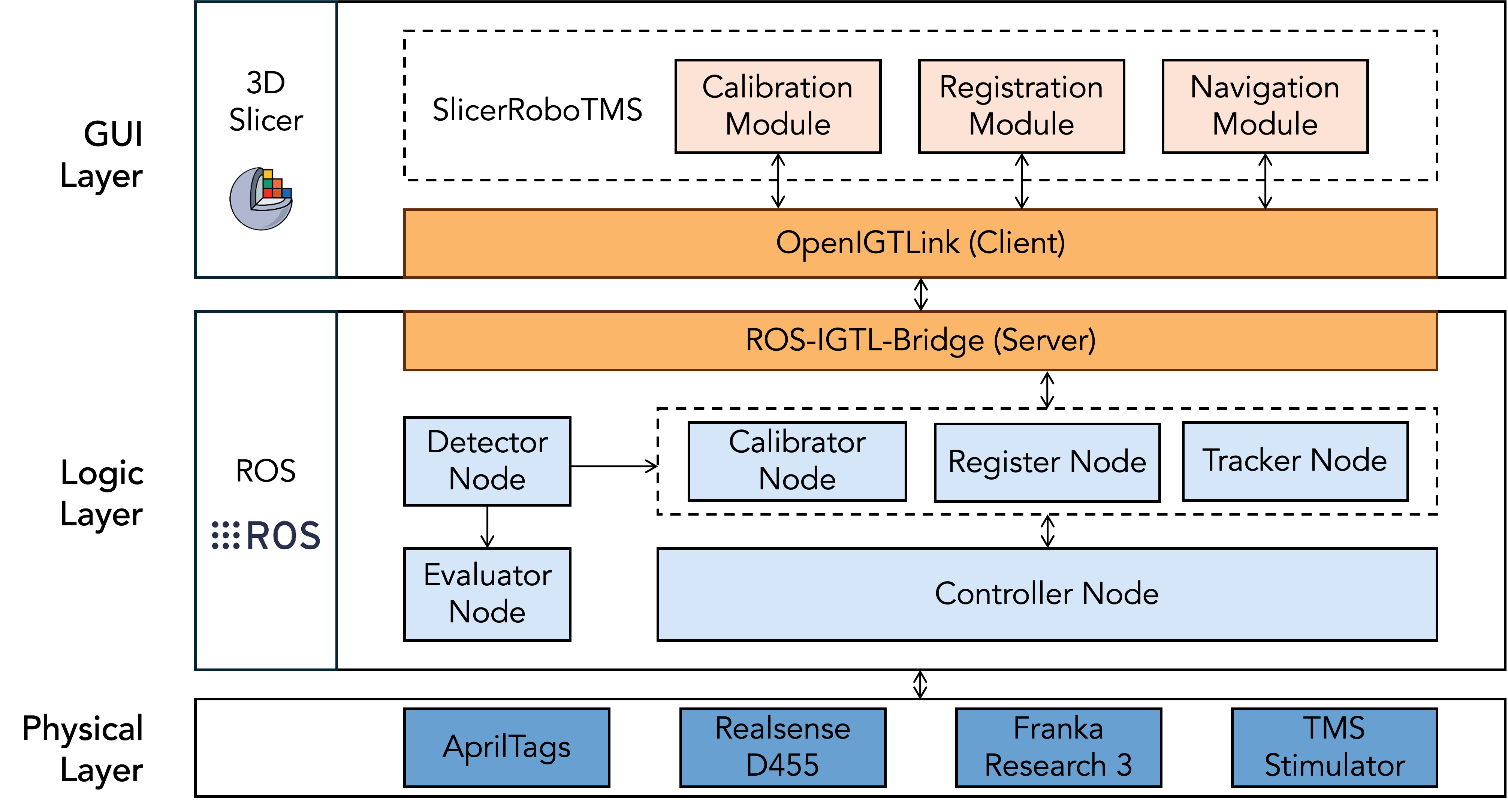
The software framework is built on 3D Slicer and ROS, enabling calibration, registration, neuronavigation, and robotic control within a unified, fully open-source environment. Its modular architecture allows researchers to extend or replace individual components without modifying the rest of the pipeline.

Software Framework
An overview of the proposed OpenRoboTMS software framework

Demonstrations

The following videos demonstrate the key components of the OpenRoboTMS platform, including calibration, registration, and navigation. These videos showcase the platform's capabilities in real-world scenarios, highlighting its potential to further enhance precision and reproducibility as a benchmark in TMS applications.

Preliminary Validations

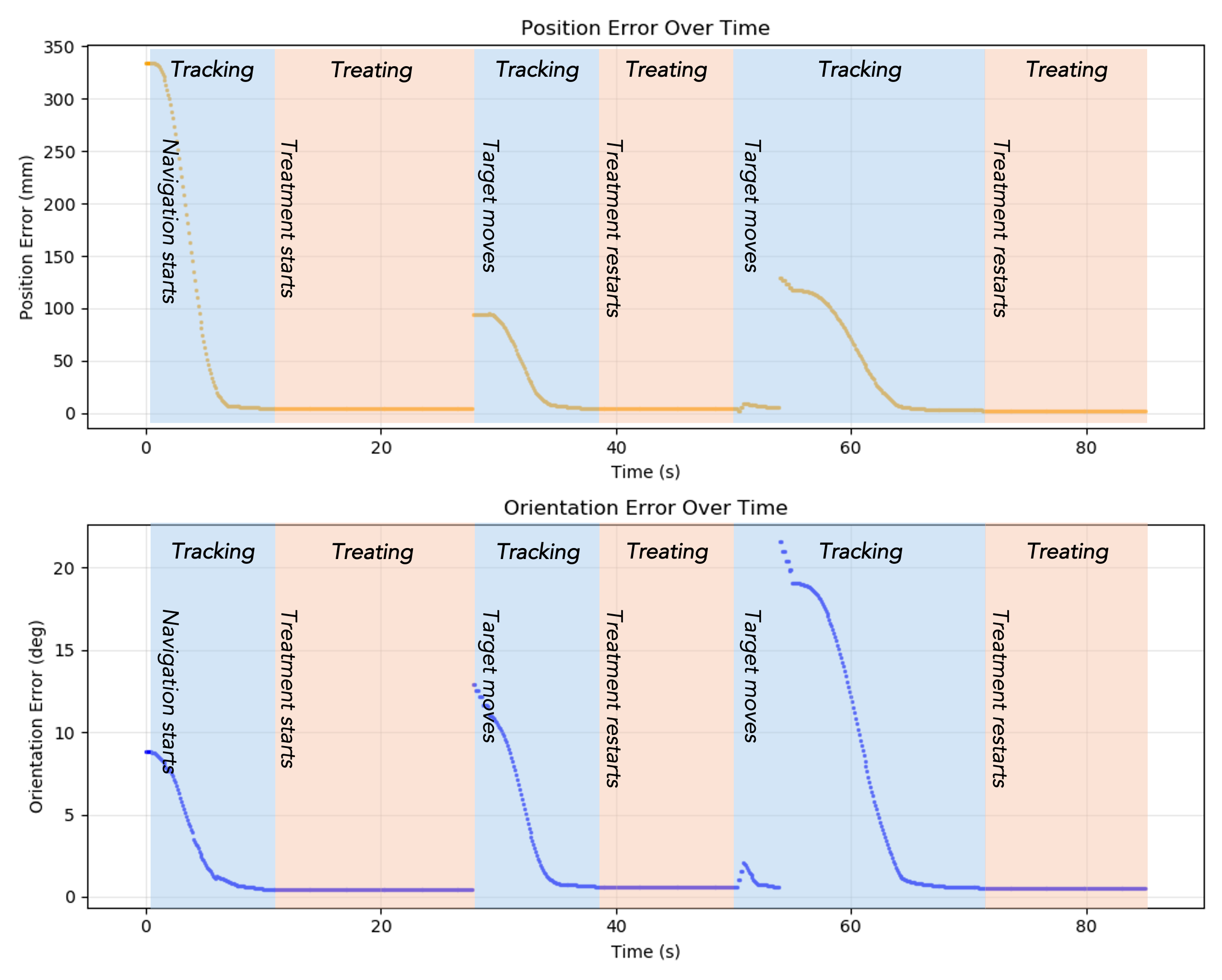
Convergence of position and orientation errors during robotic tracking
(a) Convergence of position and orientation errors over time during robotic tracking.
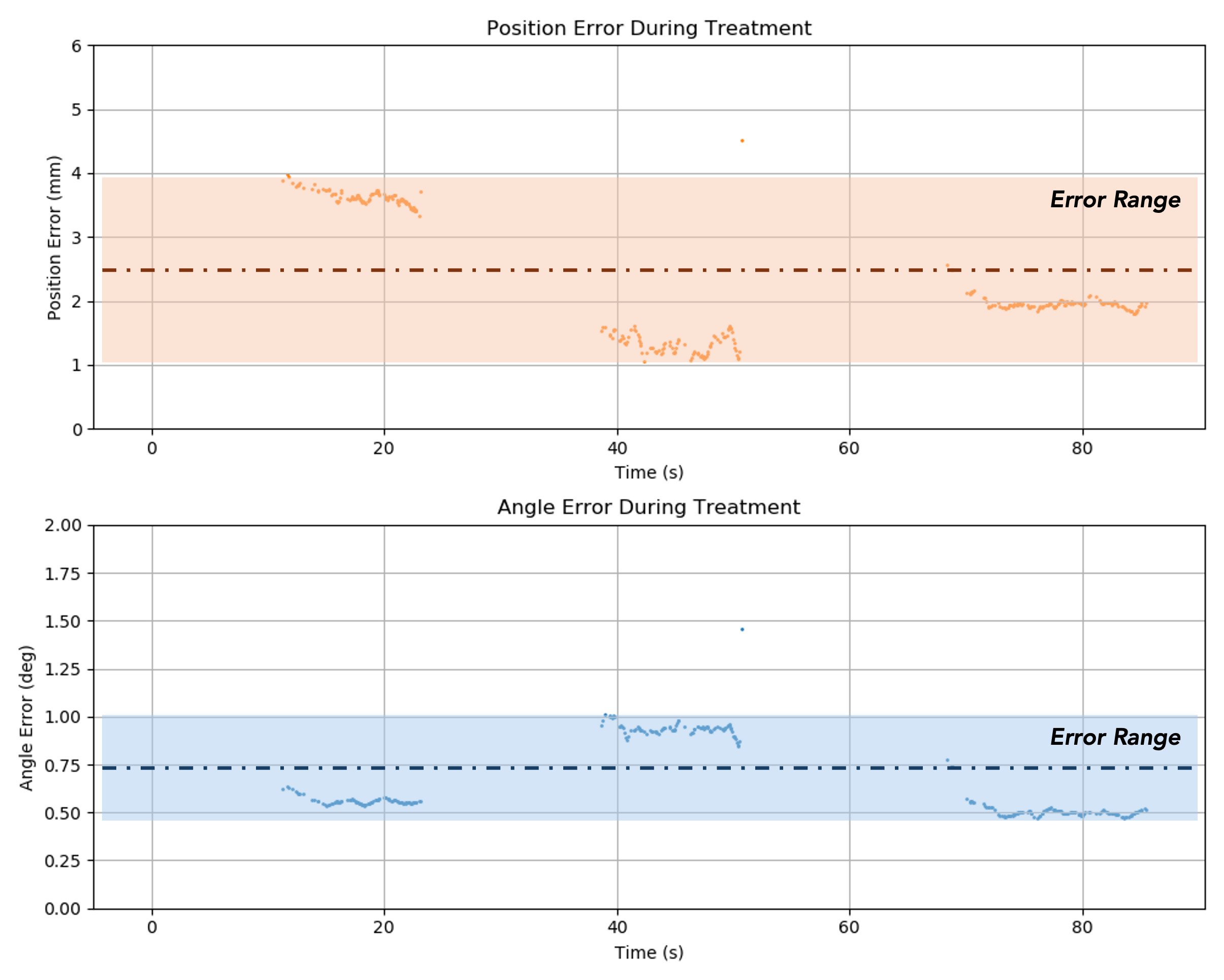
Positional and angular errors during treatment
(b) Positional and angular errors during treatment

Figure (a) shows that when the target moves, the robotic tracking system converges rapidly, reducing both positional and angular errors to within acceptable thresholds before stimulation is applied. Figure (b) demonstrates that the system achieves millimetre-level positional accuracy and sub-degree angular accuracy during treatment, confirming improved stimulation precision and repeatability.

Global Visitor Map